English Minor

Students majoring in any discipline at the University are eligible to minor in English. The minor encourages breadth of knowledge in literary studies and offers experience in critical analysis. 15 credits in English courses must be completed; 4 out of 5 of these credits must be taken at Florida Atlantic University and at least 4 out of the 5 classes must be taken in the English Department. If a course is taken outside of the English Department, it must be approved by the department and have a literary studies focus. English Education majors should note that no more than 1 course can count toward their major and English minor.
The minor complements any major in Business, Communication, Political Science, Languages and Linguistics, Art, and History, to name a few.
Please see the English Minor Info Sheet and Checklist from Student Academic Services.
BA English (39 Credits)
| 3 credits | ENG 3822: Intro to Literary Studies |
|---|---|
| 3 credits | LIT 3213: Literary Theory |
| 6 credits | Category I Courses (Literatures of Ethnicity, Gender, and Culture) |
| 15 credits | Category II Courses (American Literature, British Literature, and Genre Studies; including 6 credits of pre-1800 Literature) |
| 3 credits | Category III Courses (Writing and Rhetoric) |
| 9 credits | English Elective Courses |
Current majors may refer to either the BA English Checklist or the BA English with Professional and Creative Writing Concentration Checklist to track your progress.
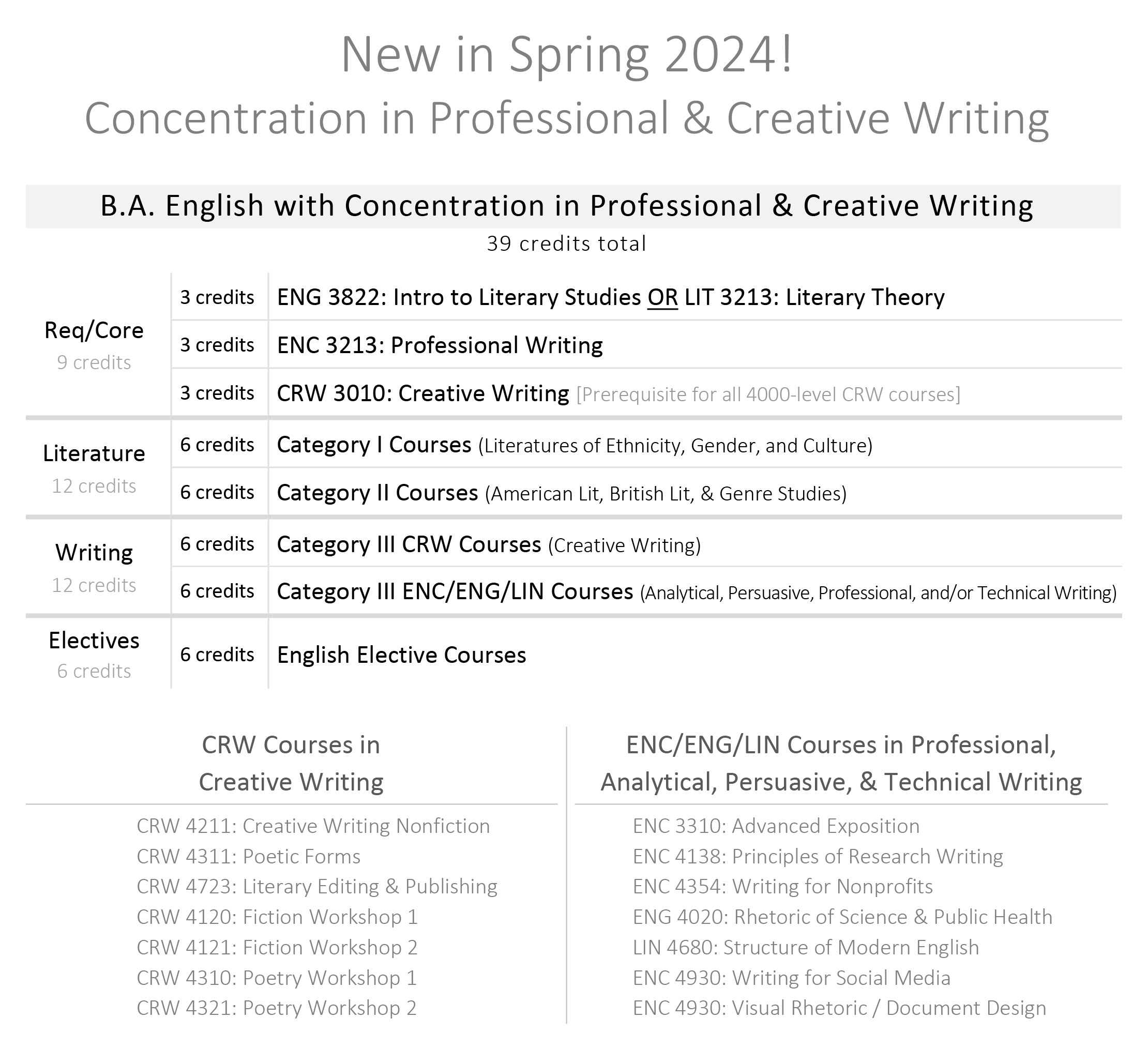
New in Spring 2024 !
BA English + Professional & Creative Writing Concentration
Other Information
Please see our extended course descriptions of course offerings by term. See the Registrar's Course Schedules for current course offerings and the FAU Course Catalog.
For transfer students: at least 75% of the major must be completed in the English Department at FAU. Transfer work to be credited toward the degree must be evaluated by the Department.
For more about the objectives and structure of English courses, please refer to FAU's Student Learning Outcomes Assessment for the English Department.
Master of Fine Arts
MFA students specialize in fiction, poetry, or creative nonfiction, pursuing half of their coursework in creative writing workshops and half in literature and theory seminars.
- MFA Program in Creative Writing Website
- Student Advisement Checklist: Creative Writing
- Coastlines - This website supplements our annual publication, Coastlines, the literary magazine featuring the creative writing and artwork of Florida Atlantic University students.
Admission
The Department of English at Florida Atlantic University offers an MA and an MFA in Creative Writing. Applicants should specify degree and genre.
The necessary application form can be obtained from the English Department or the FAU website.
Applications must include:
- Writing sample
For Fiction: 20 to 25 pages of literary fiction
For Creative Non-Fiction: 20 to 25 pages of literary creative non-fiction For Poetry: 15 to 20 pages of poetry - A brief statement of intent that discusses your desire to earn an MFA degree and places your writing within a literary tradition, describing your experiences as both a reader of literature and a writer specific to the genre in which you are applying. For example, what writers do you see as standouts within that same tradition, and what specifically do you admire about their writing? What aspects of craft and technique do you hope to learn from them—or what have you already learned from them? What traditions do those writers follow (or break away from), and do you feel you are similarly writing within a particular set of parameters (or breaking from expectations of the genre)? Applicants should consider these questions simply as a guideline; the statement of intent should be composed creatively and in whatever way that best captures the interests and influences of the individual writer.
- Two letters of recommendation
- Undergraduate transcripts (minimum 3.0 GPA)
- Application form
- Application fee
The writing sample, statement of intent, and two letters of recommendation should be sent directly to the Department of English; all other application materials should be sent to the Office of Graduate Studies and Admissions with copies sent to the Department of English.
Deadline for Fall admission: January 15.
Deadline for Spring admission: November 1.
Stay connected with the MFA at FAU:


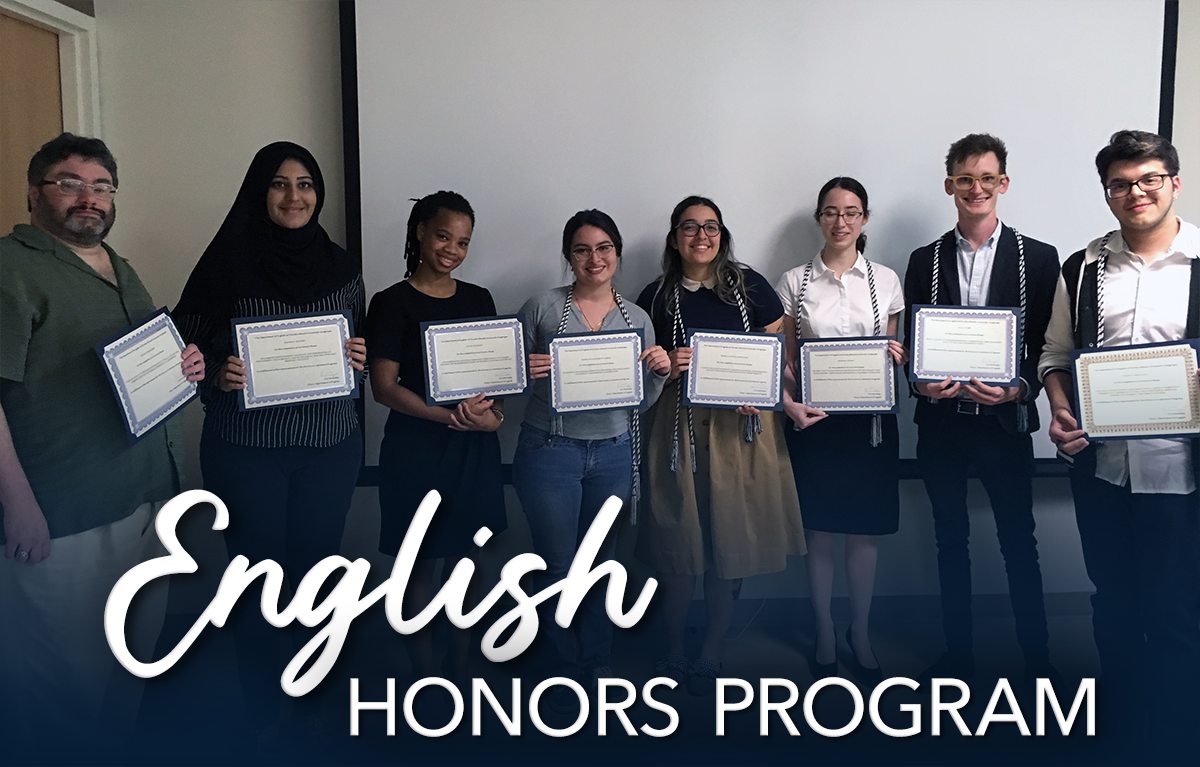
Honors Program
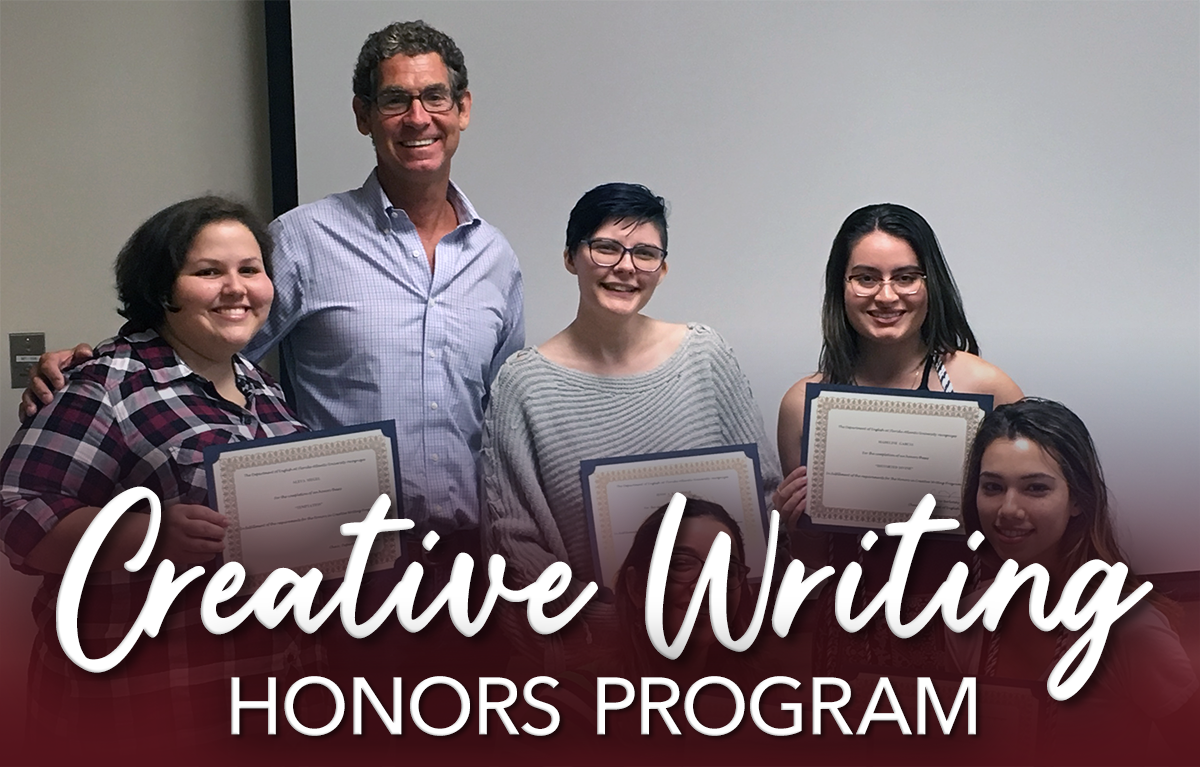
Creative Writing Honors Program
MA Program Requirements and Optional Concentrations
Students pursuing the MA in English should be advised in their selection of courses each semester in order to assure progress toward the degree. For an advising appointment, please contact Erin Kiley at ekiley1@fau.edu or 561-297-3830. Graduate Advising is located in CU 306.
The department offers two optional concentrations: Science Fiction and Fantasy or Rhetoric and Composition. We are one of the only programs in the world offering graduate-level coursework in SFF. This year we are celebrating the 20th anniversary of SFF at FAU! Recent course offerings have included Theorizing the Fantastic, Mythologies in Latinx SFF, Afrofuturism: Race to the Future, Cyborg Rhetorics, Artificial Intelligence in Literature and Film, Cyborg and Posthuman Rhetorics, Utopia/Dystopia, and Superheroes. SFF graduate students in the program regularly present and publish their research.
Students in our Rhetoric and Composition concentration gain theoretical background and situate their own practices of writing and approaches to teaching within current discussions in composition studies. Students have opportunities to develop portfolio materials that demonstrate their experience in professional and technical writing. Recent course offerings have included Composition Theory and Methodology, Rhetoric of Race in Social Discourse, Rhetorics of the Body, Cyborg and Posthuman Rhetoric, and Professional Writing: Pedagogy and Practice.
Core Courses and Requirements
MA students take two core courses (6 credits):
- Research Methods for Advanced Literary Study (ENG 6009)
- Literary Criticism I (ENG 5018) OR Literary Criticism II (ENG 5019)
MA students must also fulfill three historical coverage requirements:
- one Medieval and/or Early Modern (pre-1700) course
- one 18th and/or 19th century (1700-1900) course
- one 20th and/or 21st century (1900-present) course.
MA students must complete a thesis or a comprehensive exam (6 credits, taken over two semesters).
If the foreign language requirement (two semesters of college-level study in a language other than English) is not already met, it may be fulfilled by taking LIN 6107: History of the English Language, Readings for Research, or by a FLATS or CLEP exam demonstrating proficiency.
No course with a grade below "B-" (2.67) will count toward the Master's degree, and students must maintain a minimum GPA of 3.0 ("B") for graduation.

The M.A. in English is a two-year, 30-credit program that culminates in a 40-60 page thesis or a comprehensive exam. Graduate courses are taught by an award-winning and internationally-recognized faculty actively publishing in their fields. Students may choose to pursue an optional concentration in Rhetoric and Composition and we offer one of the only graduate concentrations in Science Fiction and Fantasy in the world. Our courses this past year have included seminars on Artificial Intelligence in Literature and Film, the writings of Emerson, Fuller, and Thoreau, Cyborg and Posthuman Rhetoric, James Joyce’s Ulysses at 100, Disability in American Literature, Victorian Crime Fiction, and Mythologies in Latinx SF/F.
The M.A. in English program offers outstanding preparation for doctoral work or for future career paths that value independent research and writing as well as long-term project design, development and presentation. A number of our M.A. alumni have gone on to Ph.D. programs and to tenure-track or instructor positions. For current or prospective educators, many school districts—including Palm Beach County—offer “Advanced Degree Pay” to teachers holding a graduate degree in their subject area. Our internship program offers students the opportunity to connect their degree to a range of career paths. Our graduate alumni are working across a wide range of industries, including nonprofit development, technical writing, research and editing for national publications, content writing and social media marketing for financial advisors, academic administration, and curriculum development. Among our Spring MA 2023 graduates, 88% have either enrolled in a PhD program or have accepted a full-time position.
Graduate students may enroll in coursework full-time, part-time, and/or during the summer. Classes are offered in the evening to accommodate work schedules. For full-time students, tuition waivers and graduate stipends are also available through Graduate Teaching Assistant positions awarded on a competitive basis. Assignments typically involve teaching first year writing courses, working at the University Center for Excellence in Writing (UCEW) and/or working as a research assistant to department faculty. More information about graduate funding may be found at our Graduate Funding Information page.
Prepare for a career with many chapters.
MA in English Info Sessions
EVENTS

SFF @ FAU
FAU Next Wave Fellowships
Meet Our Grad Students
M.A. IN ENGLISH APPLICATION REQUIREMENTS & INSTRUCTIONS
Apply for Spring admission by Feb 1.
Apply for Fall admission by Jan 15.
Intructions for International Applicants
Current Students
- Thesis guidelines and graduation deadlines
- Exam guidelines
- Internships
- Graduate Certificate in Environmental Studies
- Graduate Certificate in Women, Gender & Sexuality Studies
M.A. in English Students
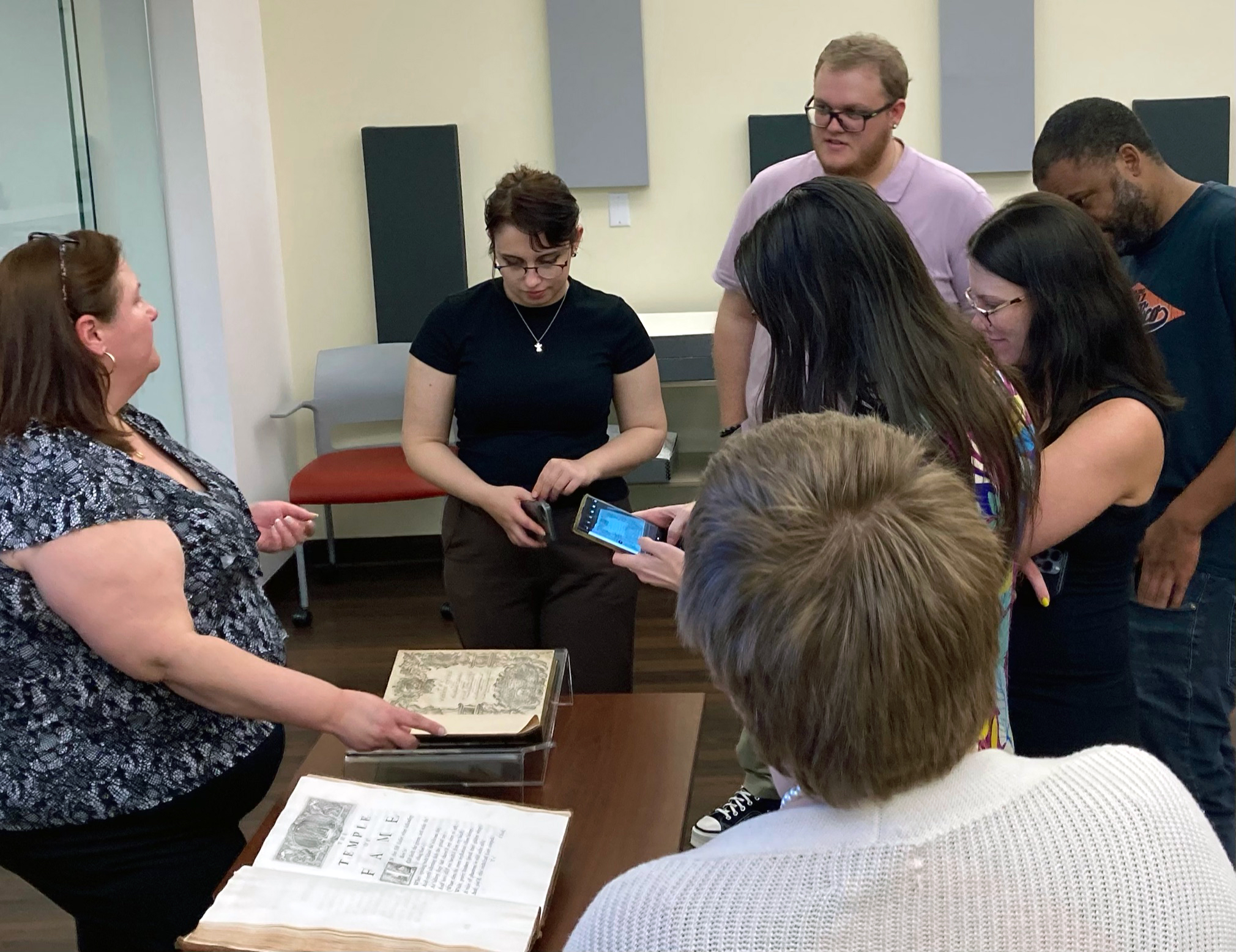
Research Methods grad students meet with Victoria Thur, Head of Special Collections at FAU Libraries.
Research Methods grad students
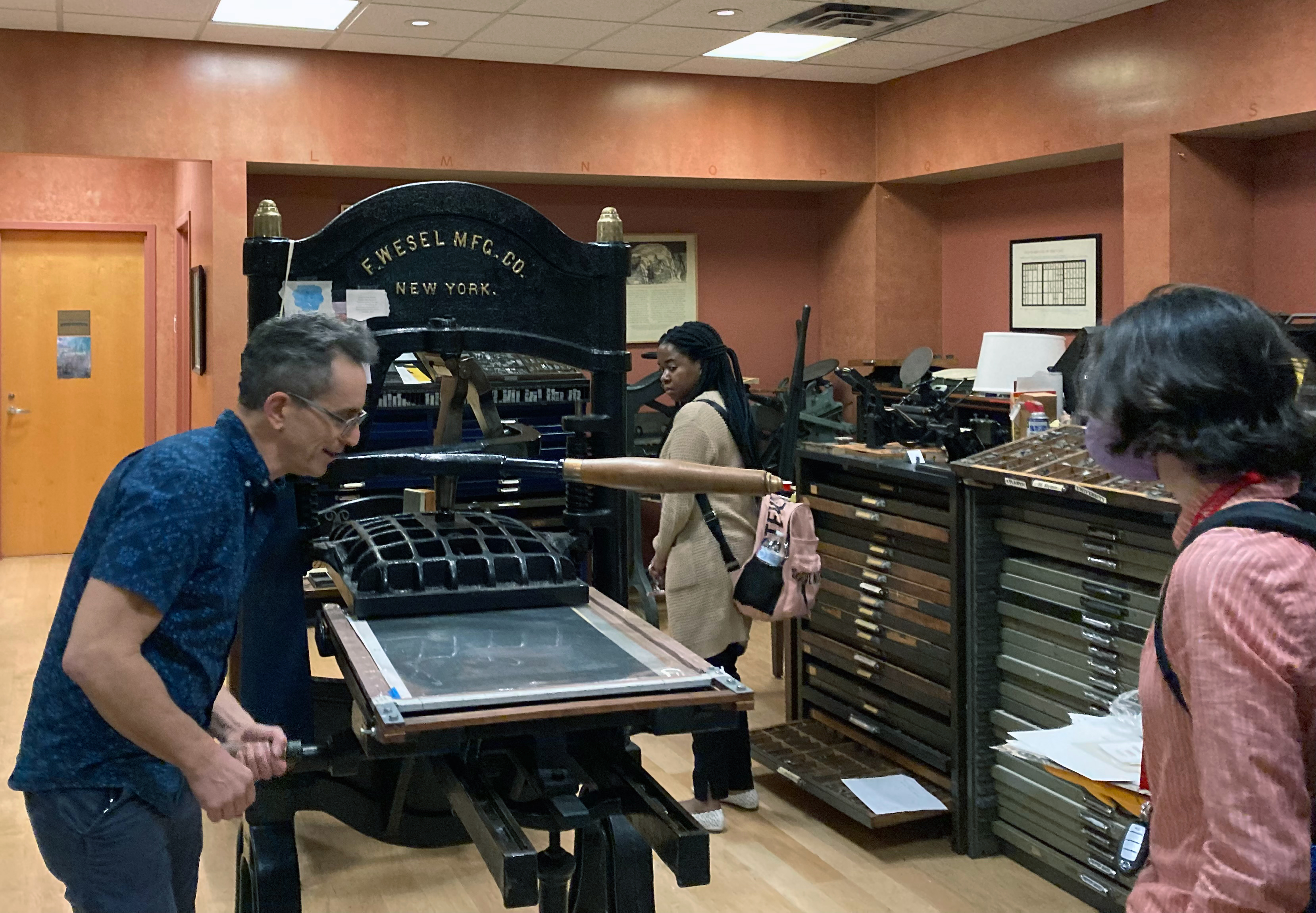
Grad students learn about printing presses with John Cutrone, Director of the Jaffe Center for Book Arts.